

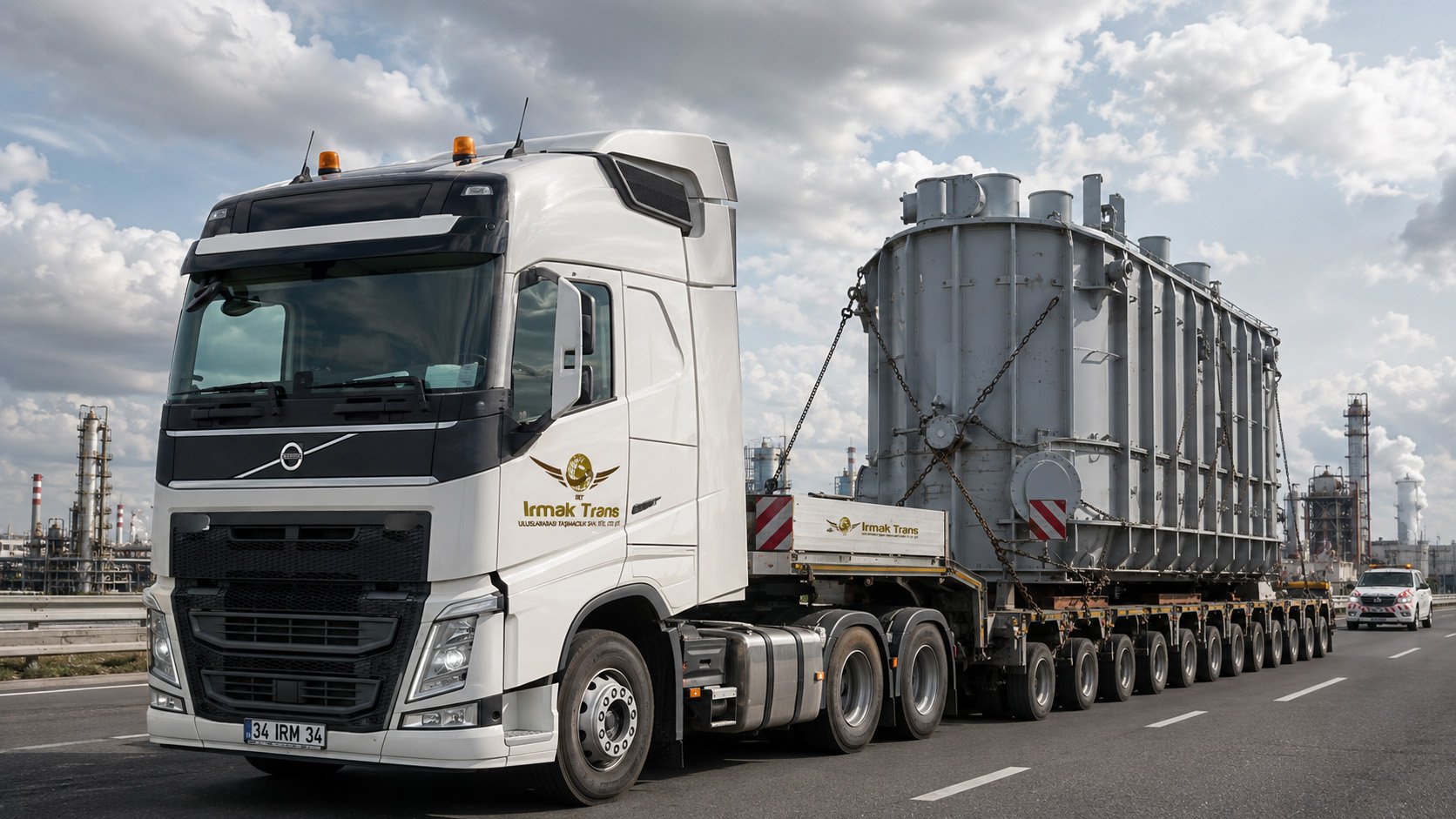
Irmak Trans International Transportation Industry Trade Limited Company heavy load and out-of-gauge project transportation only As transportation of high tonnage or large size cargo We do not evaluate. These operations; technical specifications of the load analyzing, determining the right tools and equipment, detailed examination of the route and the entire process It requires carrying out in professional coordination.
Industrial machinery, energy equipment, construction equipment, production parts of facilities, steel constructions, tanks, silos, generators, transformers and similar large-scale loads may not be shipped via standard transportation methods. In such loads, measurement, weight, center of gravity, loading method and The conditions of the destination area must be evaluated together.
Irmak Trans has 3 and 4 axles with different technical features and dimensions. heavy and bulky loads with lowbed vehicle options offers solutions for transportation. load for each project. Vehicle planning appropriate to the characteristics and route conditions is being done.
Our Mardin/Kızıltepe based operation structure; Mardin, Mersin, Supported by our connections in Iskenderun and Iraq, from Türkiye Different international countries, especially Iraq and Middle Eastern countries Responding to project transportation needs for routes is given.
What is Heavy Load and Out of Gauge Transportation?
Standard transport vehicles and general road usage dimensions cannot be shipped within; width, height, length, special planning in terms of total weight or axle load loads that require heavy loads or out-of-gauge loads can be evaluated.
A load is not just because it is high tonnage, it is standard special dimensions due to being out of size or center of gravity. It is considered as a project load because it creates transportation conditions. maybe. Transportation method of two different loads with the same tonnage, completely different from each other due to their shape and weight distribution maybe.
For this reason, it is a standard for heavy load and out-of-gauge transportation. There is no tool or uniform method of operation. Each load should be examined on a project-specific basis; vehicle, route, loading, The fixing and delivery plan must be prepared separately.
Irmak Trans, from pre-operative evaluation stage to delivery heavy and out-of-gauge loads by planning all processes up to It aims to deliver the product to the target point in a controlled manner.
Cargo Groups We Offer Transportation Solutions
To different sectors, provided that vehicle and route suitability is evaluated Transportation of heavy, bulky and special loads can be planned.
Industrial Machinery
Production lines, pressing machines, CNC systems and factories Large-scale equipment used in installations.
Energy Equipment
Transformer, generator, turbine components, power plant equipment and technical units.
Work and Construction Machinery
Excavator, dozer, loader, crusher, crane components and construction site equipment.
Steel Constructions
In bridge, factory, warehouse, energy and infrastructure projects long or wide steel parts used.
Tanks and Silos
Industrial tanks, pressure vessels, silos and large volumetric process equipment.
Infrastructure Project Loads
Road, bridge, tunnel, dam, factory and large construction special loads for projects.
Mining Equipment
Crushers, screens, drilling equipment and mine sites used heavy machinery.
Port and Maritime Equipment
Parts of port cranes, boat or ship equipment and large maritime units.
Specific Technical Analysis for Each Load
Correct planning in heavy cargo transportation requires detailed transportation of the load. It starts with evaluating technical knowledge. The load is only Not the total weight, dimensions, center of gravity, transportation points and structural features should also be taken into consideration.
How the load will be placed on the vehicle, how the weight will be placed on the axles how it will be distributed and what may occur during transportation. How to control movements before the operation is evaluated.
Technical drawings, manufacturer information and information about the load to be transported included in the planning process if loading area conditions exist is done. So that the suitable lowbed, axle structure and fixing method can be determined more accurately.
The aim is to prevent the use of vehicles that are not suitable for the characteristics of the load, possible unplanned interventions and re-operations is to prevent it as much as possible.
Information Examined in Technical Analysis
- Total length of the load
- Width and height measurements
- Total weight and center of gravity
- Transport and lifting points
- Sensitivity and balance characteristics of the load
- Loading and unloading area conditions
- Suitable vehicle and axle structure
Our Lowbed Vehicle and Equipment Solutions
It has different dimensions and axle structures depending on the characteristics of the project. means of transportation are evaluated.
3 Axle Lowbed
In projects that comply with load size, weight and route conditions Can be used for different carrying needs.
4 Axle Lowbed
Higher payload or different weight distribution It can be used in heavy load projects that require
Low Platform Structure
For high loads, the total carrying height It helps keep it more controlled.
Different Platform Dimensions
Technical requirements for loads that are long, wide or require special placement Alternatives appropriate to their needs are evaluated.
Fixing Equipment
Load the load into the vehicle with chains, tensioners and appropriate auxiliary equipment. It is aimed to remain under control.
Project Specific Equipment
Auxiliary support according to the shape of the load and transportation requirements, The use of wedges and protective equipment can be planned.
Route Study and Transition Planning
For out-of-gauge loads, only between the origin and destination not only the distance but also the physical and operational characteristics of the route. is decisive.
Total carrying height, width, length and weight of the load bridges, underpasses, overpasses, roads, taking into account widths, sharp turns, sloping areas and settlements Transition conditions in the regions are evaluated.
Transport of bridges and road structures, especially with heavy loads in terms of suitability for conditions, axle load and weight distribution is of importance. Alternative routes are planned when necessary.
Border gates, crossing procedures in international operations, Country-specific transport rules, permit processes and delivery Site conditions are also considered as part of route planning. is evaluated.
Detailed route study is revealed during the operation. possible waiting, redirection and re-planning aims to reduce the need for
Road widths are evaluated for the safe passage of vehicles and cargo.
Height constraints such as bridges, underpasses and power lines are examined.
The turning ability of long vehicle combinations is evaluated.
The effects of heavy loads on the road and bridge structure are taken into account.
Permission, Notification and Accompaniment Organization
In heavy and out-of-gauge load transportation, the size and weight of the load, specific to the route and the country where the operation will be carried out. leave, notification or accompaniment requirements may occur.
Before the operation, technical information of the load and the vehicle to be used Planning the necessary processes by evaluating the combination is intended. Permit durations and route conditions are determined by the transportation schedule. taken into account in its creation.
Depending on the nature of the operation, lead vehicle, follower vehicle, field officer, crane crew or other support services can be included in the coordination.
Since countries have different practices in international transportation, border crossings and country-specific procedures on a project basis should be evaluated.
Controlled Loading
Taking the heavy load onto the vehicle is the most critical part of the transportation process. is one of the stages. The loading method depends on the nature of the load and It is determined according to the conditions of the loading area.
Depending on the requirements of the operation, crane, forklift, ramp, tractor system or other lifting equipment can be used.
The load ensures weight distribution on the vehicle and driving safety. It should be positioned so as not to disturb it.
Floor, maneuvering area and vehicle entry-exit in the loading area conditions are evaluated before the operation.
Load Securing and Security
Sliding, tipping or movement of the load on the vehicle, It may pose a serious risk to cargo and road safety.
Therefore, it depends on the shape of the load, its weight, center of gravity and Fixing method suitable for its position on the vehicle should be used.
Chains, tensioning systems, wedges and guards Equipment is evaluated according to the project needs.
Checking the fixing points and load balance during transportation Protection is an important part of operational safety.
Operational Risk Management
Successful in heavy load and out of gauge project transportation The basic condition of the operation is to bear the risks that may arise. is evaluated before starting.
Vehicle incompatibility, route restrictions, weather conditions, border passages, lack of space, loading equipment problems and Unplanned waits are the main factors that can affect the operation. are among the elements.
It may occur due to vehicle, axle, equipment and load incompatibility. risks are evaluated.
Passage restrictions, road works and physical obstacles evaluated before the operation.
Severe wind, rain and visibility conditions depend on the nature of the load. are taken into account accordingly.
Taking into account permit, loading, border and delivery processes A realistic time plan is created.
International Heavy Cargo Transportation
International project transportation, domestic heavy load In addition to operations, border crossings, customs processes, It also includes country-specific routes and permit applications.
Irmak Trans, Middle Eastern countries, especially Iraq, Turkish Transportation to republics and European countries with its experience in planning international project loads offers solutions.
With our Mardin/Kızıltepe center and Mersin, İskenderun, Mardin and Our Iraq operation connections; Türkiye's production and port Coordination between centers and Middle Eastern markets contributes to the provision of
Transport documents, border crossing dates, route conditions, delivery point and local operation requirements are included in the transportation plan.
Since each country and route may have different applications, Project planning is done according to current operating conditions.
Türkiye
Transportation organization between production, industry, port and project sites.
Iraq
Project transportation with regional field knowledge and local operation connections.
Middle East
Transportation planning in accordance with the operation and border crossing conditions of the region.
Europe and Turkish Republics
International organization according to project conditions and route suitability.
Authorized Transportation Structure
Irmak Trans carries out its international transportation activities It operates within the scope of C2 Authorization Certificate.
National and international transportation during operation processes Considering the legislation and the requirements regarding the route is taken as basis.
Sectoral developments and international events with RODER membership Transportation practices are followed.
CMR Insurance Assurance
that may occur during international transportation operations Insurance assurance against risks is an important factor in service quality. is one of the elements.
Company transportation has a limit of 1.5 million Euros per vehicle. It is guaranteed within the scope of CMR insurance coverage. is stated.
Insurance coverage and project-specific conditions must be determined before transportation. It should be evaluated separately according to the nature of the load.
Why Irmak Trans in Heavy Cargo Transportation?
Experience, accurate planning and strong operation coordination We bring them together within the service structure.
Required Information for Project Proposal
The right vehicle, route and cost for heavy load and out-of-gauge transportation Complete sharing of load information for planning is of great importance.
Frequently Asked Questions
How to determine whether a load is out of gauge?
The total length, width, height of the load on the vehicle, Its weight and distribution to the axles are evaluated. Route and country Since valid limits may vary depending on the project, examination should be made.
What information is required for transportation?
Size, weight, photo, departure and destination addresses of the cargo, The installation method and planned date are basic information. technical It makes planning easier if there is drawing and center of gravity information.
Can the same lowbed be used for every heavy load?
No. Weight, size, center of gravity and route of the load number of axles, platform size and transportation conditions according to capacity may vary.
How long does the permit process take?
Duration; depending on the size and weight of the cargo, the route, and the countries to be crossed. and may vary according to the practices of the relevant institutions. Therefore It is recommended to share project information as early as possible.
Are loading and unloading services included in the scope of transportation?
Loading, crane, field or unloading according to the conditions of the project organization can also be planned. Service scope offer must be clearly determined at this stage.
Is international heavy cargo transportation possible?
By evaluating the load, vehicle and route suitability, Türkiye, Iraq, Middle East, Turkish Republics and European routes Project transportation can be planned for